
The date, and what it is
The next Thaipusam falls on 22 January 2027. The date moves each year because it follows the Tamil calendar, landing on the full moon in the month of Thai, when the star Pusam is at its highest.
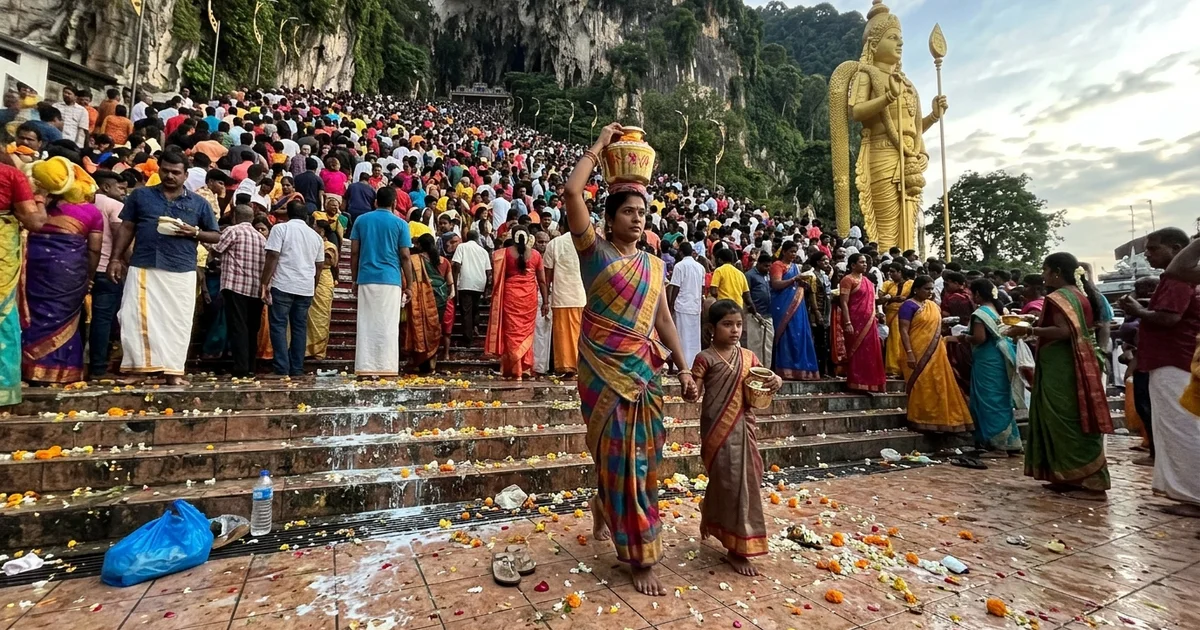
At Batu Caves it is the biggest day of the year by a very wide margin. Over a million devotees and spectators pass through the site across the festival period. The ordinary rhythm of the place, a quiet morning climb and a cool cave at the top, is replaced by an enormous, loud, continuous procession that runs through the night and into the following day.
Thaipusam honours Lord Murugan, and the festival is built around the Vel, the sacred spear his mother Parvati gave him. Understanding who the day is for changes how you experience it, which is the argument for having a guide on any visit and what our guided Batu Caves tour is built around. If the deity is unfamiliar, the short version is on our page about the Lord Murugan statue at the heart of the festival.
What actually happens
Devotees prepare for weeks: fasting, prayer, abstinence. On the day they carry offerings up the 272 steps to the shrine in Temple Cave.
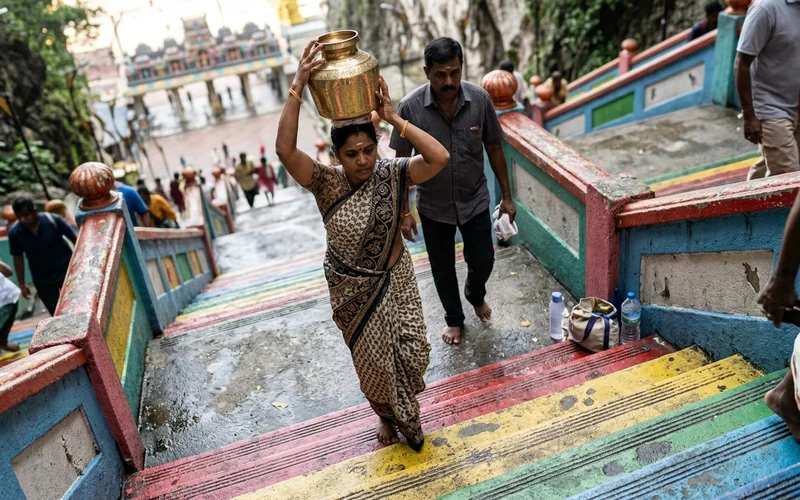
The simplest offering is a paal kudam, a pot of milk carried on the head, often by women and children. Many thousands of these move up the staircase over the course of the festival.
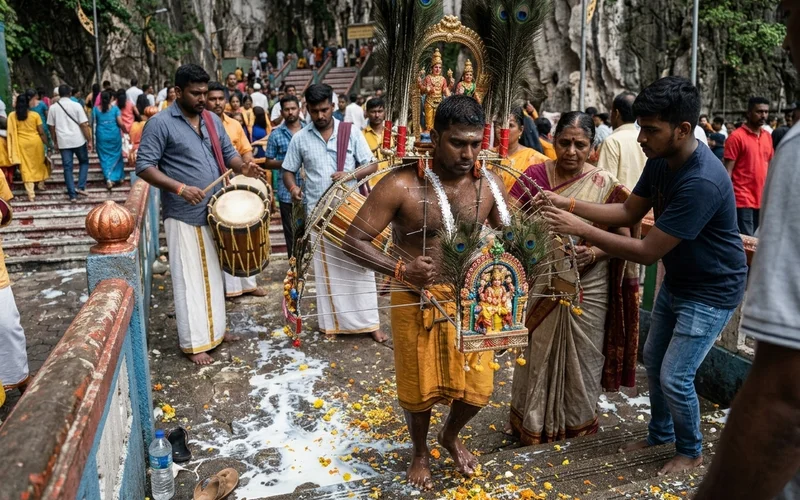
The kavadi is the form most visitors have seen photographs of. At its simplest it is a decorated wooden or metal frame borne on the shoulders. At its most demanding, the vel kavadi is an elaborate structure held to the body by skewers and hooks through the skin, carried in a trance state, accompanied by family members, drummers and chanting. It is an act of devotion and thanksgiving, usually undertaken in fulfilment of a vow.
This is worship, not a performance
The people you are photographing are in the middle of something serious to them. That is the whole frame for how to behave here.
The reality of the crowds
Be realistic about the scale. Movement is slow, the staircase becomes a dense standing queue, and the noise, heat and press of people are constant.
| What to expect | Detail |
|---|---|
| Crowd size | Over a million across the festival period |
| Peak hours | Overnight into early morning on the main day |
| Getting there | KTM Komuter runs extra services and is packed; roads around Batu Caves are heavily congested |
| Moving on site | Expect long, slow queues on the staircase |
| Facilities | Food stalls and temporary facilities everywhere, with long queues |
| Heat | Hot and humid, even at night, with very little shade in the crowd |
Practical advice: go overnight or very early rather than mid-morning, wear shoes you can stand in for hours, carry water, and agree a meeting point with your group because phone signal struggles under that many people. Anyone with mobility limits should think hard. The 272 steps are difficult on a normal day and considerably harder in a slow-moving crowd.
Visiting respectfully
Dress modestly: shoulders and knees covered, for men and women. This matters more on Thaipusam than on any other day of the year.
Ask before photographing anyone closely, especially a devotee carrying kavadi or in trance. A wide shot of the crowd is one thing. A lens in someone’s face during a religious act is another. If a family gestures no, lower the camera.
Do not block the path of anyone carrying an offering. Give way, step aside, and let the procession move. Keep your voice down near the shrines, and follow instructions from temple volunteers, who are managing an enormous crowd in a sacred space.
Photographing Thaipusam without being a nuisance
Thaipusam is one of the most photographed religious festivals in Southeast Asia, and the results range from extraordinary to genuinely disrespectful.
The workable approach is distance and patience. Wide shots of the crowd on the staircase, the lights over the forecourt, the mass of colour moving upward, none of that requires you to be in anyone’s way. Longer lenses let you photograph detail without standing inside a family’s procession.
For anything closer, ask. A gesture and a raised camera is usually enough, and people often say yes. If they do not, lower it and move on. The one thing not to do is photograph a devotee in trance at close range without any acknowledgement, which happens constantly and is exactly the behaviour that makes temple volunteers wary of visitors with cameras.
Practically: low light for most of the best hours, so a fast lens or a phone with a decent night mode earns its keep. Bring more battery than you think. And keep your bag closed, because the macaques do not observe the festival calendar.
Planning ahead
If you want to attend and would rather have someone with you who can explain what you are watching, tell us early. Thaipusam arrangements need planning well ahead of 22 January 2027, and honest advice about the crowds is part of that conversation.
Hotels in central Kuala Lumpur book out around the festival, and so does anything with a view of the route. If Thaipusam is the reason for your trip rather than something you happen to be around for, work backwards from the date when you book flights and accommodation, not forwards from whatever is left in January.